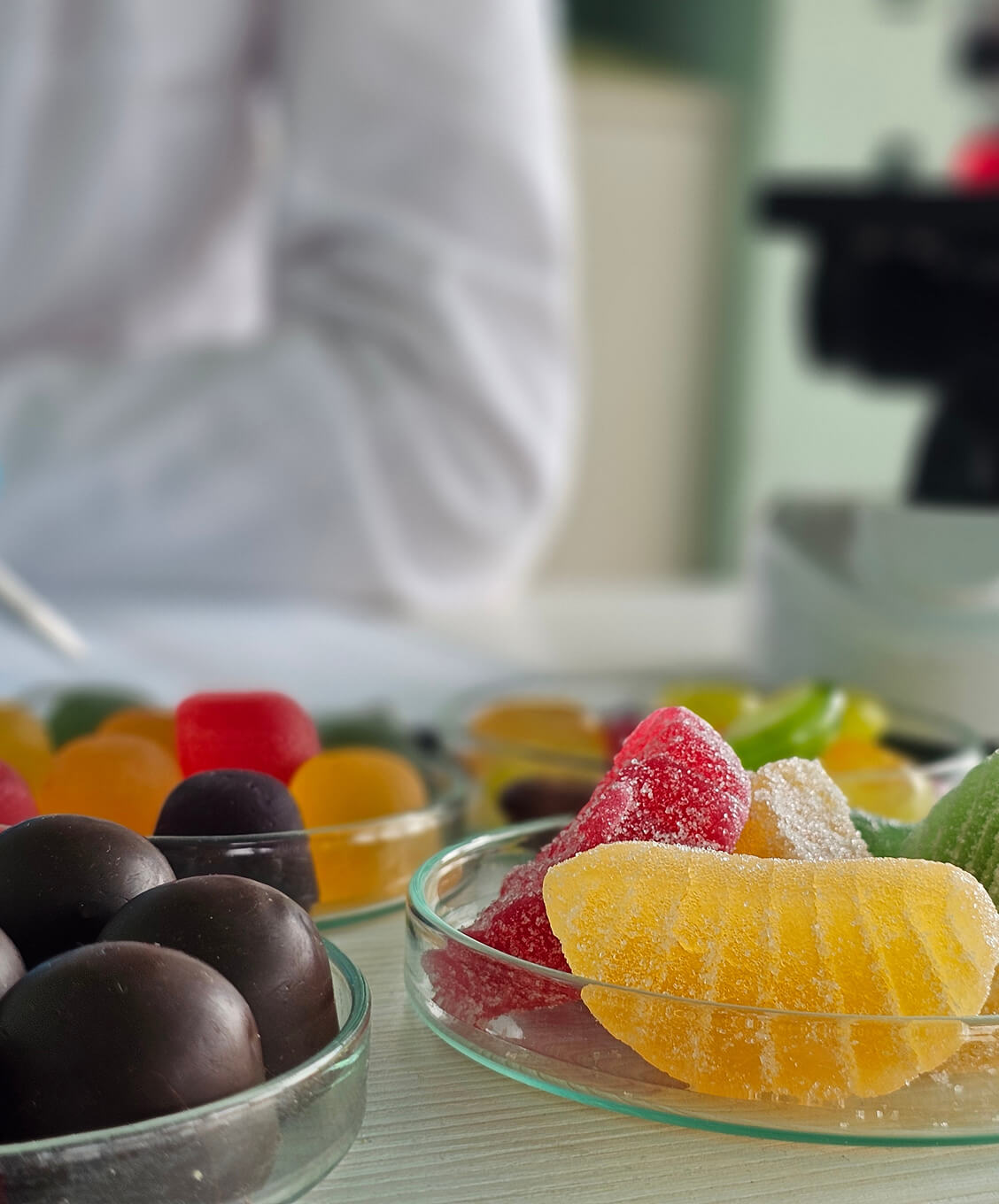
Sugars, Sugar Alcohols, and Sweetener Panel Testing
Elevating product quality with WISEcode Labs
Why WISEcode Labs for sugars, sugar alcohols, and sweetener panel testing?
At WISEcode Labs, we provide in-depth testing for sugars, sugar alcohols, and sweeteners using state-of-the-art technologies such as Ultra-High-Performance Liquid Chromatography (UHPLC) and Liquid Chromatography-Tandem Mass Spectrometry (LC-MS-MS). Our ISO 17025 certification guarantees accurate and reliable results, delivered in as little as 1 week. Whether you’re formulating new products or ensuring regulatory compliance, our comprehensive testing services equip you with critical insights for your business.
The Importance of Testing
As consumer preferences shift towards low-calorie and naturally derived sweeteners, accurate ingredient testing becomes increasingly important for:
Regulatory ComplianceEnsure your products adhere to labeling and safety regulations.
Quality AssuranceValidate the identity and purity of your ingredients for superior quality.
Building Consumer TrustFoster transparency by providing customers with clear information about the contents of their food.
Detailed sugar panel analysis
Our sugar panel offers thorough assessments of various sugars commonly found in food and beverage products, including:
Allulose
A low-calorie sugar alternative that mimics the taste of traditional sugar.
Arabinose
A naturally occurring sugar found in a variety of fruits and vegetables.
Fructose
A naturally sweet sugar, sweeter than sucrose, frequently found in fruits.
Galactose
Present in dairy products, this sugar is vital for various dietary needs.
Glucose
A fundamental energy source for the body, essential for metabolic processes.
Isomaltose
A sugar derived from maltose, useful in a variety of food applications.
Lactose
The primary sugar present in milk, important for dairy products.
Maltose
Commonly utilized in brewing and food production processes.
Mannose
A sugar with significance in cellular metabolism.
Ribose
Plays a crucial role in energy metabolism and cellular function.
Sucrose
The standard table sugar known for its widespread use.
Xylose
Sourced from plant materials, this sugar has various applications.
In-depth sugar alcohol testing
We also offer extensive testing of sugar alcohols, which are recognized for their lower caloric content and distinctive sweetness characteristics:
Arabitol
Often incorporated into sugar-free products for added sweetness.
Erythritol
A well-known low-calorie sweetener favored for its clean taste.
Galactitol
Utilized across multiple food applications for its sweetness.
Isomalt
Frequently found in sugar-free candies and confections.
Lactitol
A sugar alcohol popular in low-calorie food formulations.
Maltitol
Commonly used in sugar-free chocolates and desserts.
Mannitol
Utilized in pharmaceuticals and various food items for its sweetening properties.
Myo-inositol
A carbohydrate associated with several health benefits.
Sorbitol
Often used in diet foods and as a sugar substitute.
Xylitol
Renowned for its dental health advantages, commonly found in gums and candies.
Advanced sweetener testing panel
Our sweetener panel examines innovative and naturally derived sweeteners, providing detailed insights into their compositions:
11-oxo-mogroside V
A sweet component derived from monk fruit.
Isomogroside V
Another extract from monk fruit known for its intense sweetness.
Grosvenorine
A naturally occurring sweetener sourced from monk fruit.
Mogrosides II E, III, III E, IV, and V
Various compounds from monk fruit, each with distinct sweetness levels.
Siamenoside I
A natural sweetener with a wide range of applications.
Stevia Glycosides
Naturally extracted sweeteners from the Stevia plant, offering zero-calorie options.